Full Rig Mechanization
The first fully mechanized drilling rigs in MENA — every rig floor operation controlled remotely from the driller's cabin, with zero crew in the line of fire.


Overview
Rig floors are among the most hazardous working environments in energy. Hand and finger injuries, struck-by incidents, and human-error NPT have long been treated as the cost of doing business — and performance still swings with the experience of whoever is at the controls.
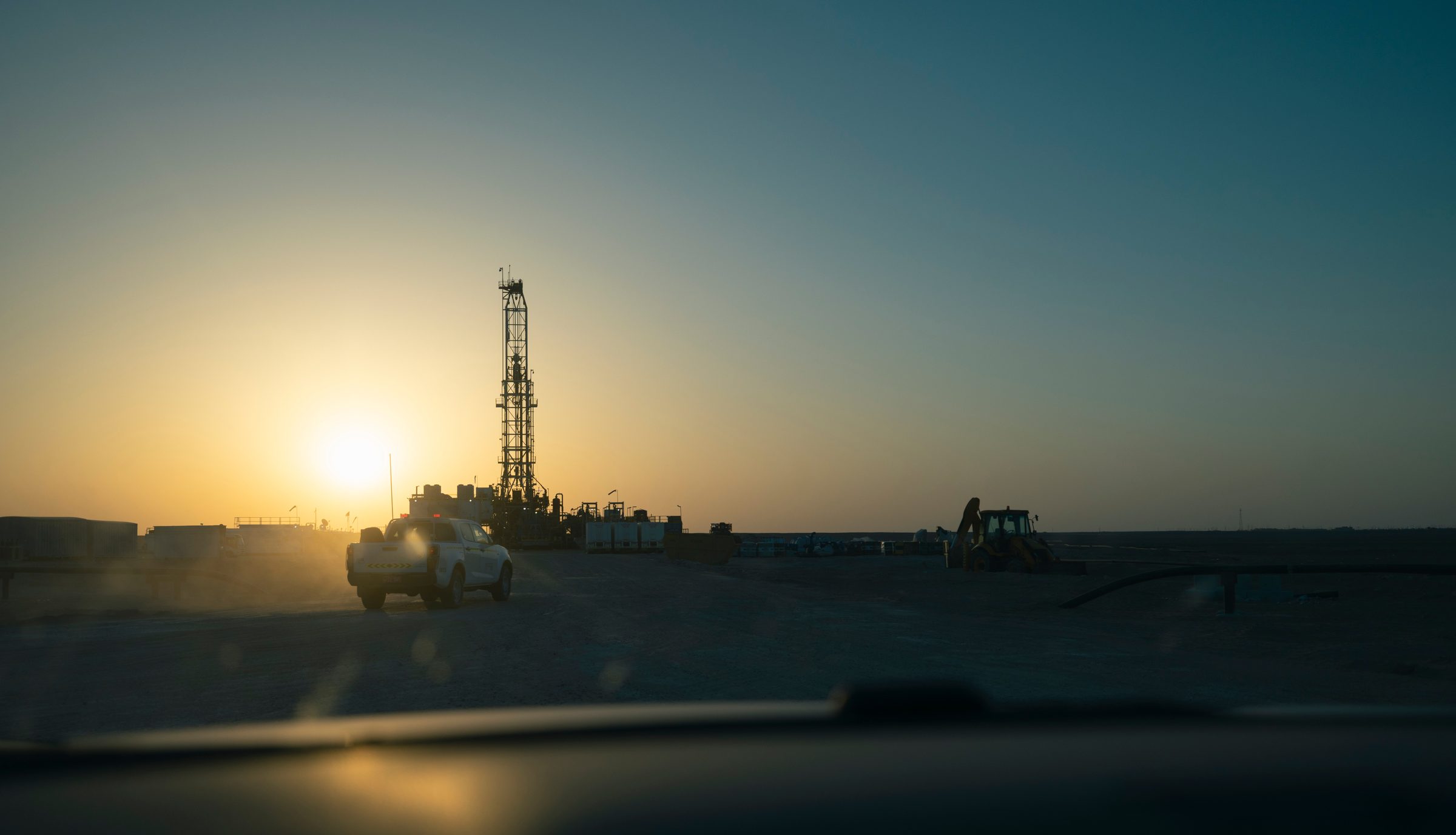
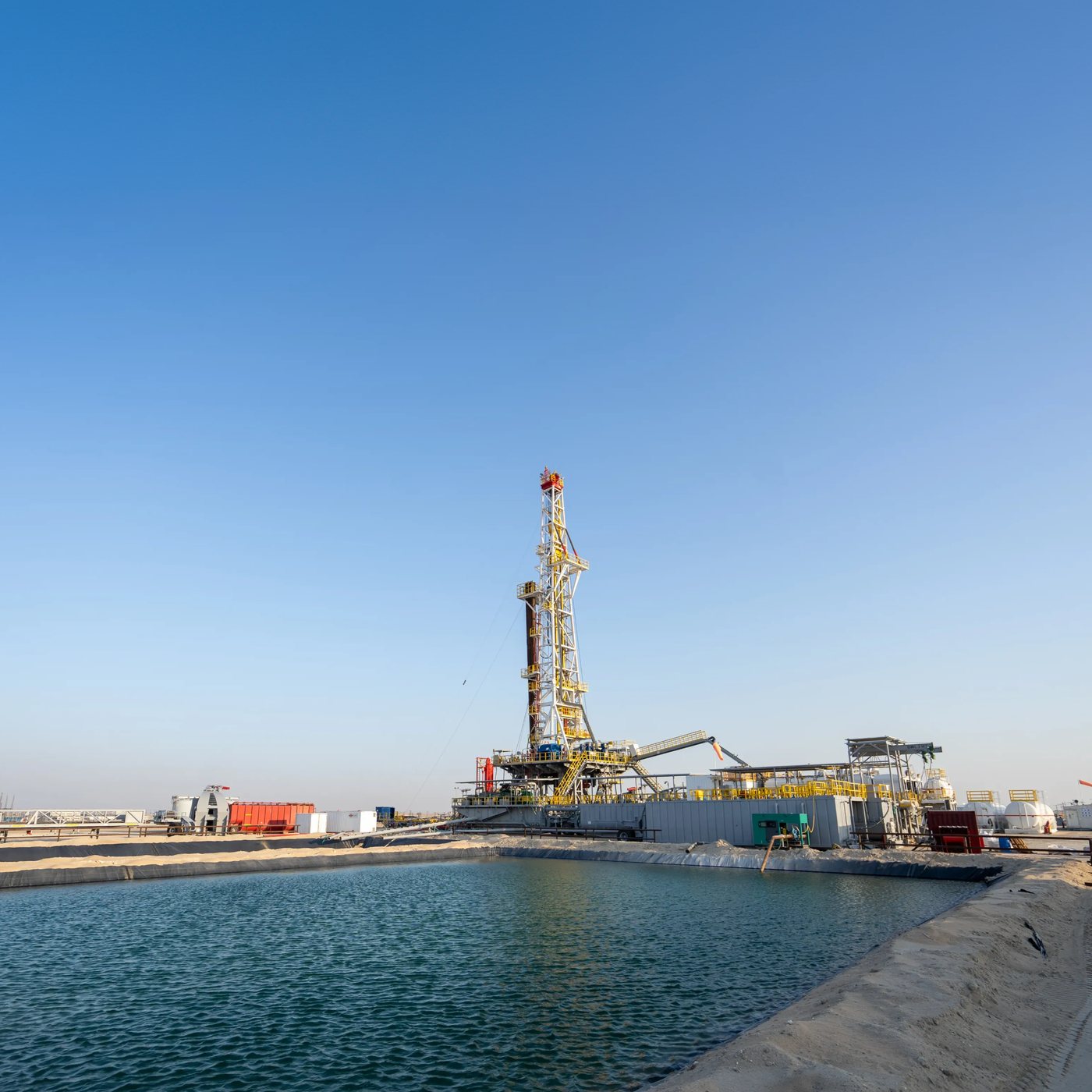
ABRAJ challenged that paradigm as the first drilling contractor in the MENA region to deploy fully mechanized rigs, starting in Oman in 2021 and expanding to Kuwait. Today approximately twelve fully mechanized 1000HP AC rigs operate across both countries — each running a complete remotely controlled equipment suite, 27+ custom tool-to-tool safety interlocks designed from real incident data, AI-powered red-zone cameras, and the NOVOS drilling automation platform with one-button sequencer operations.
“We don't just automate individual tools — we've reimagined the entire drilling operation to keep people out of harm's way while delivering better, more consistent results.”
Eng. Saif Al Hamhami, Chief Executive Officer, ABRAJ Energy Services
What the white paper covers
The problem: rig floor risk and human-error NPT
Why conventional operations keep crews in the line of fire, and how crew-to-crew variability drives inconsistent well delivery.
The mechanized equipment suite
Catwalk, BX elevator, top drive, LGA, iron roughneck, auto pipe doper, power slips, mud bucket — all run from the driller's cabin via Amphion; a full tripping sequence with nobody on the rig floor.
Safety engineered from incident data
27+ custom interlocks specified by ABRAJ engineers from real incidents/near-misses (not manufacturer defaults) plus AI Zone Management cameras detecting red-zone entry and PPE compliance.
Automation and consistency: NOVOS + sequencer
Field best practice encoded into the rig; one-button pipe delivery, centering and makeup; no competency barriers between crews.
Faster moves, smaller footprint, cleaner ops
Carrier-based transport, wireless mast raising, 90m x 80m location footprint, fuel management plus auto diesel shutoff.
What's next: AI-integrated drilling
Equipment-level human detection, predictive maintenance, behavioral analytics, ML parameter optimization.


Get the complete technical white paper
Download the full white paper to see how ABRAJ runs fully mechanized 1000HP AC rigs with zero crew on the rig floor, 27+ custom safety interlocks, and NOVOS automation for consistent, repeatable drilling performance.
Download White PaperFAQs
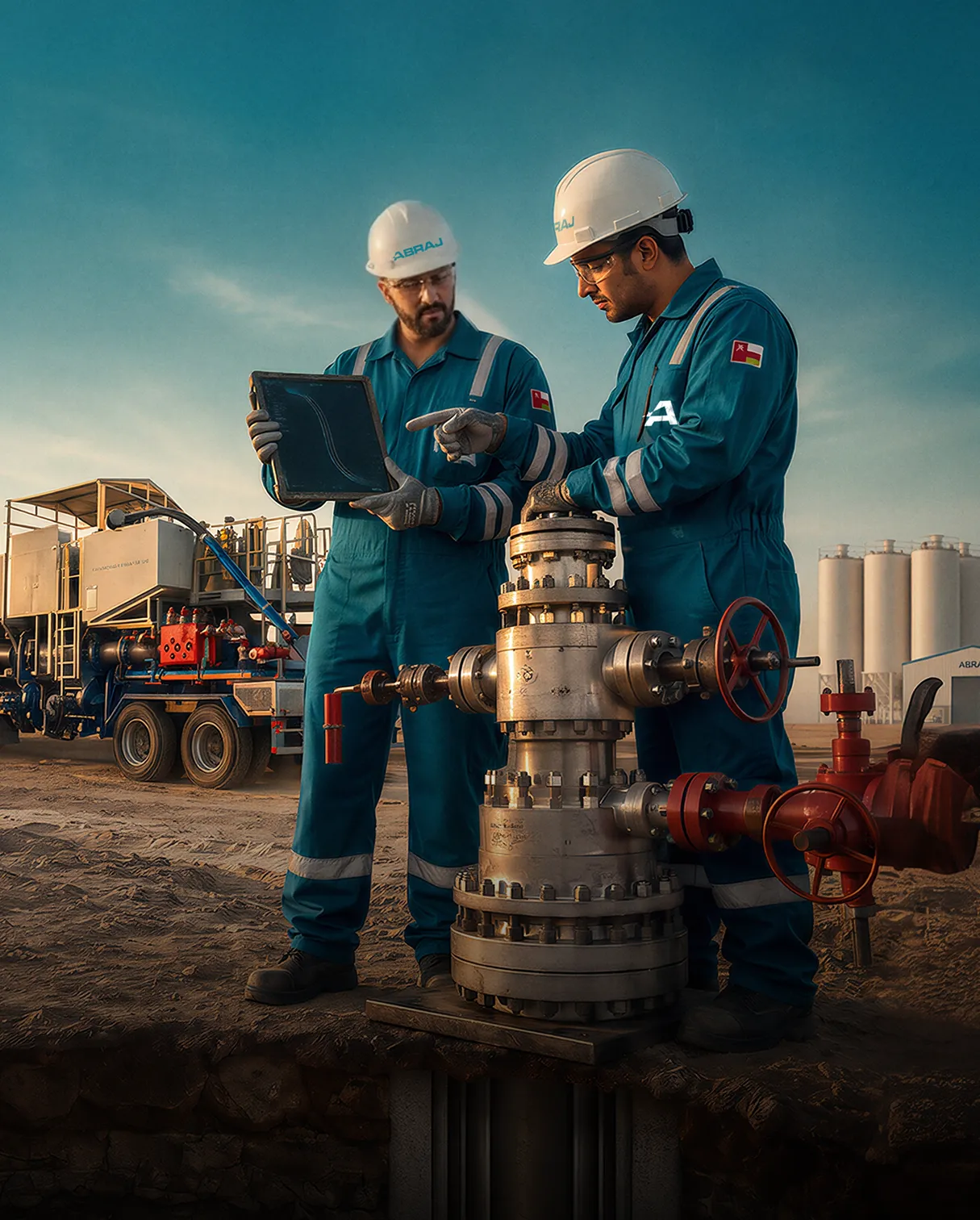
A fully mechanized rig replaces manual pipe-handling and connection work with equipment operated remotely from the driller's cabin. Every major tool — iron roughneck, pipe handler, elevator, mud bucket, pipe doper — is controlled from the cabin via the rig's integrated control system, keeping crew away from the rig floor during drilling operations. ABRAJ operates seven fully mechanized 1000HP AC rigs (six in Oman and one in Kuwait).
Traditional rigs require crew members in close proximity to heavy moving machinery to guide, push, align and stab hands-off tools. Mechanization removes that need for core rig floor activities — pipe handling, connection make-up and break-out, thread compound application, and mud bucket operations — by executing them remotely and via integrated safety interlocks that prevent unsafe combinations of tool movement. The result is a substantial reduction in personnel in the line of fire.
The rig floor is designated a Red Zone during normal operations. When equipment moves — for example, during Top Drive System (TDS) travel — the affected area temporarily becomes a Temporary No-Go Zone, and AI-enabled CCTV monitors it for personnel intrusion. Today the AI-CCTV layer triggers alarms on the driller's console; ABRAJ's roadmap is to integrate it with the interlock system so that an unsafe act or condition detected by the AI-enabled CCTV can automatically stop the operation.
Conventional drilling relies on individual crew competency and manually coordinated sequences, which introduces natural performance variability between crews and shifts. ABRAJ's mechanized rigs use process automation and sequencer technology to encode optimized, repeatable drilling parameters into the rig control system — reducing performance variability, not because crews are less capable, but because the manual work itself is the source of the variation.
ABRAJ's mechanized rigs are equipped with a process automation platform that allows drilling teams to pre-program optimal parameters (fluid, rate, weight-on-bit) for each well section. The sequencer is an additional software layer, installed on select rigs, that chains individual tool commands — slips engagement, RLA rotation, torque application, mud bucket close — into a single one-button operation for repetitive tasks such as tag-bottom and back-ream sequences. These functions are installed and available across the fleet; roll-out is progressive.
ABRAJ's interlocks were not delivered by the rig manufacturer. They were engineered from ABRAJ's own experience — actual incidents, operational errors, and lessons learned in the field over the years — and converted into engineering controls that stop human error from becoming an incident. This is why ABRAJ's interlock table targets root causes specific to real-world drilling operations, rather than generic safety protocols.
Yes. The 1000HP AC mechanized fleet is designed and equipped for HP/HT applications, including deep intermediate casing and reservoir sections under low fracture gradient conditions. The mechanized workflow, combined with proprietary cementing technologies from ABRAJ's Cementing Technologies portfolio, supports zonal isolation and well integrity in demanding pressure and temperature environments.
Two figures apply, and they measure different things. The rig footprint itself is approximately 30% smaller than a comparable conventional rig. The overall location requirement — including auxiliary layout, storage, and personnel areas — is approximately 15% smaller (per SPE-225133-MS). The exact numbers depend on operator requirements and site conditions.